When Should Roof Sheeting Be Replaced?
In this guide, we’ll explain what roof sheeting (or decking) is, when it needs to be replaced, what it costs, and how to make sure you’re not paying for something you don’t actually need.
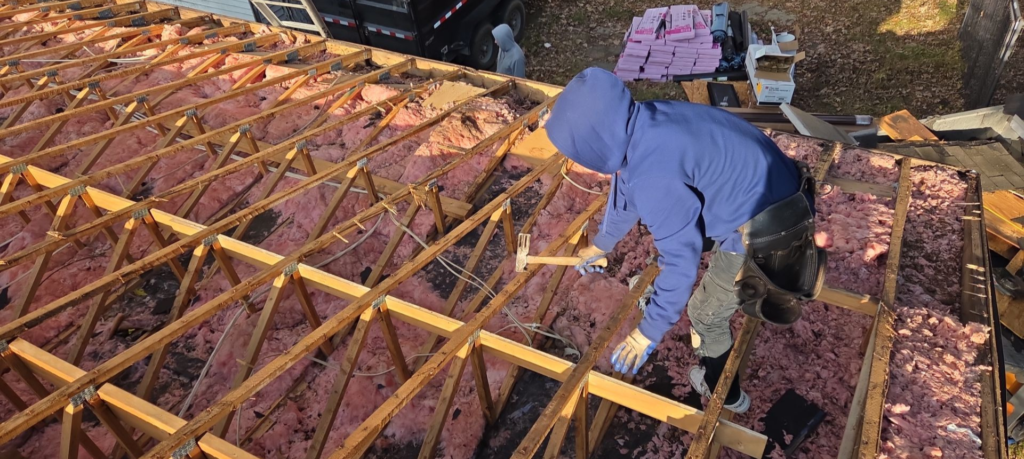
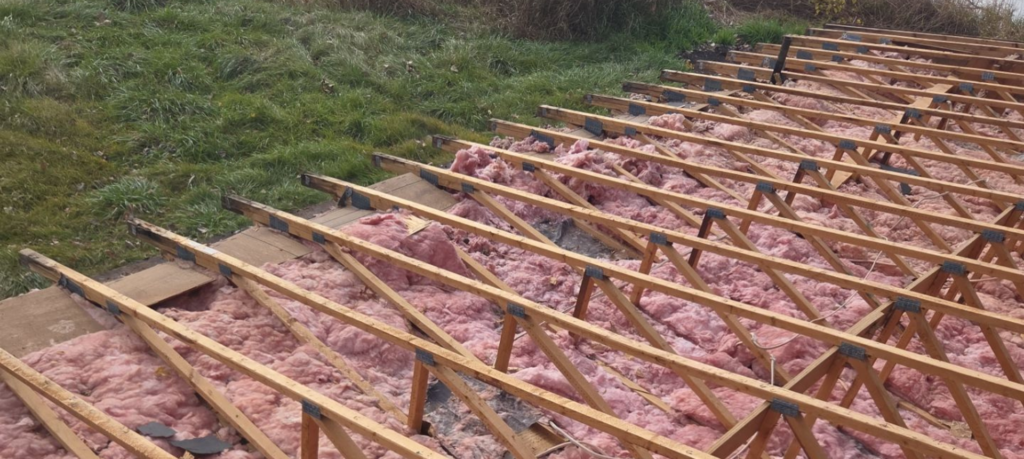
In our quotes, we usually figure two sheets just for rotted areas and/or any broken sheeting and to close off any box vents as we install ridge vents as a standard. Sometimes it is hard to tell the quality of the roof sheeting before we tear off the old roof. You simply cannot see it until then.
We always make the homeowner aware that it will then be $50 per sheet extra. We don’t make them climb on to the roof but we do take photos of everything so you can clearly what needs to be done.
Whereas some companies don’t document it which is an opportunity for a potential price increase, where it may not be justified. Once the roof is complete, you cannot check. We hate to get in and find out we need more but proper documentation and transparency, you can be sure the new sheeting was a necessity.
What Is Roof Sheeting (or Decking)?
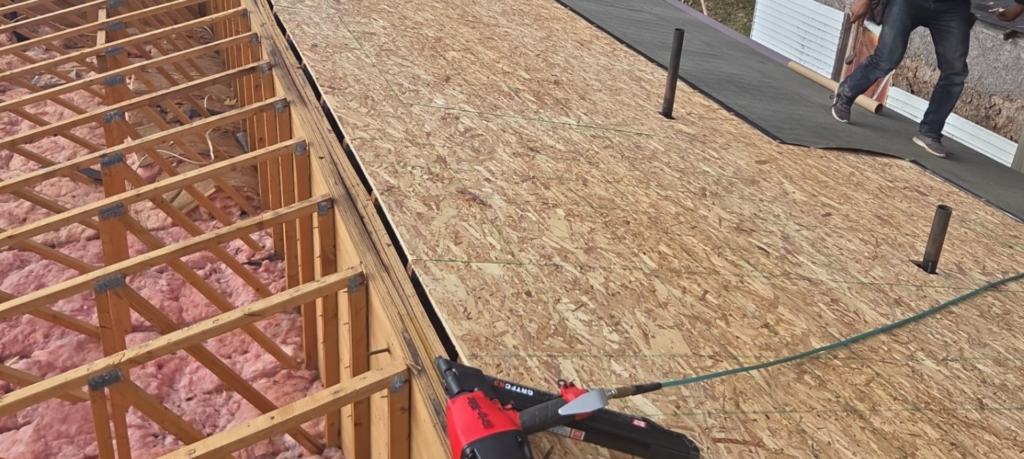
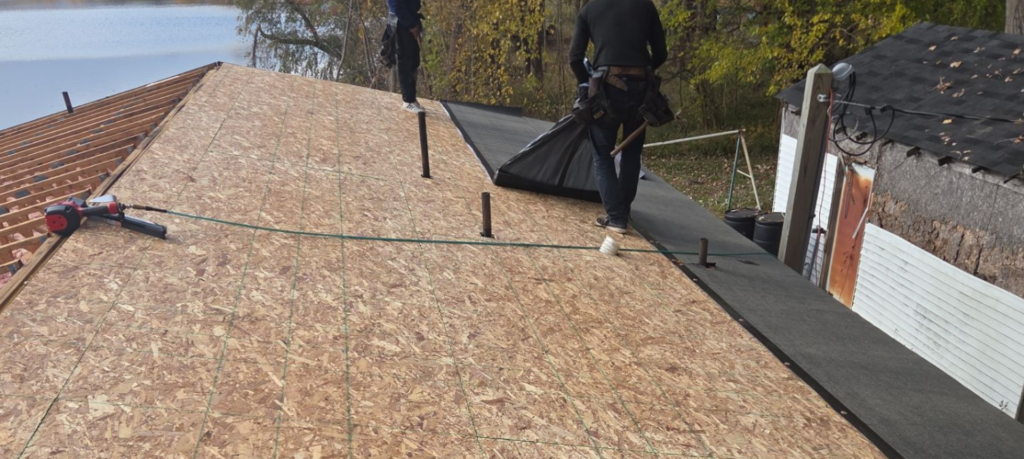
Roof sheeting, sometimes called roof decking, is the wooden base layer that sits directly under your shingles.
It provides structure, nail support, and stability for your entire roofing system.
Most Indiana homes use OSB (oriented strand board) or plywood sheeting.
When Does Roof Sheeting Need to Be Replaced?
Roof sheeting doesn’t always need to be replaced, but there are clear warning signs that it should.
1. Soft or Spongy Spots During Inspection
Sometimes, as we walk on the roof we can feel soft spots where the roof sheeting has deteriorated from moisture but it is not always detectable in that way. Some damage only becomes obvious once we have removed the roof. For manufactured homes, we find that oftentimes it has ⅜” sheetin,g which can feel spongy even when it is in good condition.
Some homeowners prefer to reinforce this with a stronger sheeting and others prefer to skip this step.
Deteriorated sheeting can cause areas to lose nail grip and can cause shingles to lift or leak.
Lyle’s Pro Tip:
“When the roof feels soft, it’s not your shingles giving way, it’s the sheeting underneath. That means there has been a water leak and the sheeting has deteriorated over time.”
2. Water Damage or Visible Rot
Dark stains, musty smells, or crumbling wood in the attic are all signs the sheeting has taken on moisture.
This often happens near chimneys, vents, or valleys where leaks linger.
Lyle’s Pro Tip:
“Sometimes visible mold on the inside of your roof deck may look like you have a leak but, in fact, this can be due to other factors such as poor ventilation or a lack of insulation”
3. Long-Term Leaks or Poor Ventilation
Even a slow drip or trapped attic humidity can break down decking fibers over time.
Replacing sheeting in these areas ensures your new roof doesn’t inherit old problems but you must also address the underlying cause.
4. Code Upgrades or Manufacturer Requirements
Older town homes often have 1” plank board sheeting, which had to be installed with 1” gaps for the old cedar shake shingles. If we tear those off, we have to replace the whole roof deck with new OSB sheeting per code-required thickness or fill in the 1” gaps between the plank boards to bring it up to code and manufacturer specifications.
Newer or more modern homes will often have OSB Sheeting – typically homes built within the last 20 to 30 years.
Lyle’s Pro Tip:
“It is important that your roof deck is brought to code and manufacturer specifications when the roof is redone.”
What Does Roof Sheeting Replacement Cost?
| Type of Repair | Typical Cost (Material + Labor) |
| Minor patch (1–2 panels) | $800 – $1500 |
| Full re-sheet single story, 4/12 pitch 25 Sq | $1,500 – $3,500 |
| Full re-sheet, two story, 12/12 pitch 25 Sq | $4,000 – $7,800 |
At Better Way Roofing, we include two replacement panels in every estimate — and photograph any extra sheets replaced.
Real Homeowner Experience
⭐️⭐️⭐️⭐️⭐️ “They worked me in quickly, helped with suggestions, and had great communication throughout the process. They also cleaned up everything thoroughly after they were done.”
— Doyle B., Better Way Roofing Client
⭐️⭐️⭐️⭐️⭐️ “Better Way was excellent. They responded quickly for a small emergency repair, met every deadline, and did the work at a very competitive price. Consistently trustworthy and knowledgeable.”
— Ryan H., Homeowner
Can You Spot Bad Sheeting Without Removing Shingles?
Not always, but a few tell-tale signs help:
- In your attic: water stains, soft spots, or sagging plywood
- On your roof: dips or uneven areas in the shingles
- In hot months: a damp or musty smell in your attic often means moisture trapped beneath decking
If you suspect damage, schedule an attic inspection before storm season.
How to Avoid Surprise Decking Costs
- Ask to See Photos Before Replacement – You deserve visual proof.
- Ensure Proper Ventilation – Prevents condensation rot.
- Don’t Roof Over Old Shingles – It hides damage and voids warranties.
- Work with Certified Roofers – They follow manufacturer installation standards.
Don’t Wait Until Rotten Decking Ruins Your Roof, Get a Free Roof & Attic Inspection Today
Roof sheeting issues don’t fix themselves. The longer moisture sits, the more it spreads, and the more it costs to repair.
If you’re not sure what’s hiding under your shingles, let our team show you exactly what’s happening with clear photos and honest answers.
Call Better Way Roofing at (574) 370-8342 or Contact Us Online we’ll check your roof sheeting, attic ventilation, and decking condition before it becomes a bigger problem.