
The short answer
- The difference: on an exposed fastener roof you can see the screws from the ground. On standing seam (the same thing as hidden fastener) the next panel interlocks and covers them up.
- What each costs: exposed fastener runs about $6.30 per square foot installed. Standing seam runs about $11. Our recent jobs: $21,730 to $30,295 for exposed fastener, $31,395 to $44,028 for standing seam.
- How long each lasts: standing seam is a thicker steel, 26 gauge against 29. The bigger difference is the screws. Exposed fastener screws need checking from year 10 and usually replacing somewhere between 15 and 25 years. Standing seam has no exposed screws to worry about.
- Warranty: 40-year paint warranty on both. Our own workmanship warranty is 10 years on exposed fastener and 20 on standing seam.
- Which we install most: exposed fastener, purely on price.
- Which I’d pick: standing seam, if you can afford it and you’re staying in the house a while.
Once you’ve decided on metal, the next question is which metal. It’s the one I get asked more than any other on a metal job: what’s the real difference between the two, and is the expensive one worth it?
We install both. Here’s how they compare, what each one costs on a real house, and which one I’d put on yours.
What’s the difference between standing seam and exposed fastener metal roofing?
Quick Answer: Exposed fastener panels are screwed down through the face, so you can see the screws. Standing seam panels lock together and hide them. Standing seam and hidden fastener are two names for the same system.
From the ground, it’s simple. On an exposed fastener roof you can see the screws. Every panel is screwed down through its face, in rows, and each screw goes through the panel, into a furring board, and down toward the roof deck. On a standing seam roof you won’t see a screw anywhere.
Here’s how standing seam does it. Each panel has a flange along one edge, a bit like siding but running vertically. We screw through that flange. Then the next panel interlocks over the top of it and covers the screws. The seam stands up off the roof, which is where the name comes from.
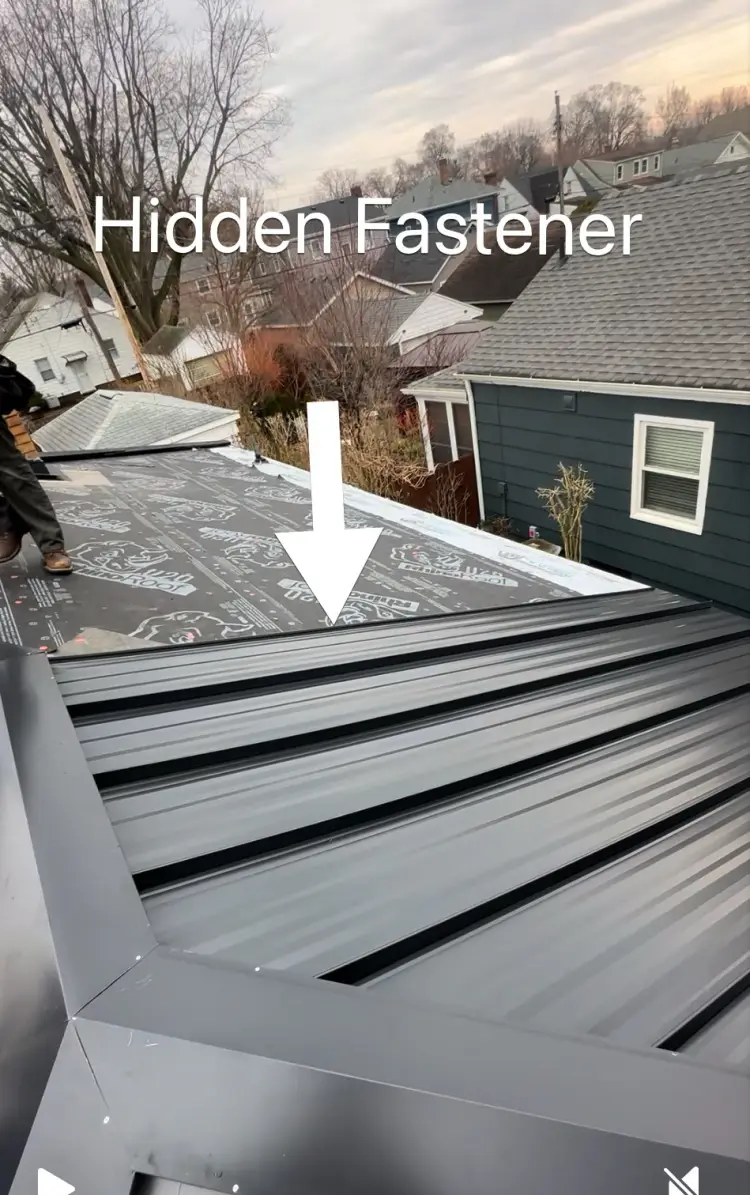
The two panels are a different width and a different thickness of steel. Exposed fastener is usually 29 gauge. Standing seam is 26 gauge, which is a little thicker. (With gauge, a lower number means thicker steel.)
We’ve got our own names for the tiers, and you’ll hear them on an estimate. The plain exposed fastener panel we call pole barn metal. There’s another exposed fastener panel with a different rib that mimics the look of hidden fastener, and we call that one Shadow Form. The top tier is hidden fastener, which is standing seam.
Why we screw exposed fastener metal to furring boards, not straight into the deck
Quick Summary: Most roof decks are OSB, and the self-drilling screws on exposed fastener metal strip out of OSB. We put furring boards down first and screw into those, so every screw has a solid wood backer.
This is the part of an exposed fastener install that decides how long it lasts, and it’s the part a cheap quote leaves out.
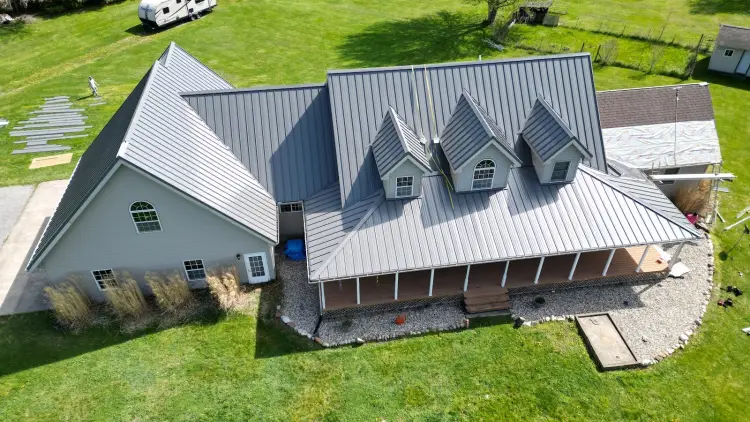
Exposed fastener metal goes down with self-drilling screws, because they have to go through the metal panel. If you screw those directly into the roof deck, they tend to strip out. Most homes around here have an OSB deck, and OSB doesn’t hold a screw well over the years. So we run furring boards (1x4 spruce boards) across the roof every two feet, and the panels screw into those. A solid wood backer. If the house has a real plywood deck, or the old 1x6 and 1x8 boards, we can screw right into it.
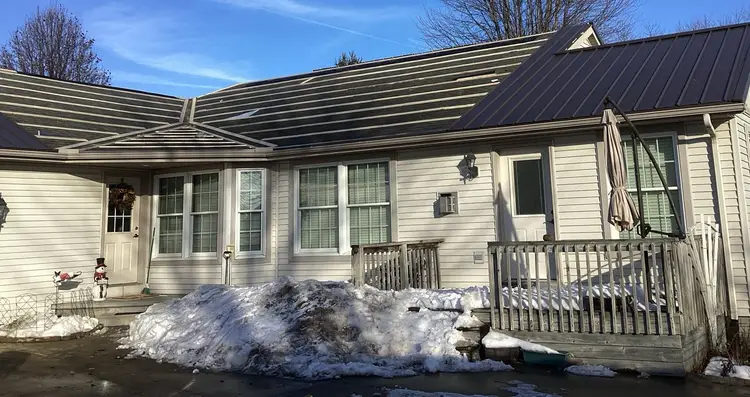
Hidden fastener is different. We screw it right into the roof deck, but we’re not going through the metal panel, so we use more of a wood screw. That won’t strip out like the self-drilling ones will.
Going straight over old shingles is the other problem. Once the shingles start to deteriorate, the metal panel settles with them, but the screw stays where it was. Now the panel isn’t tight to the screw anymore. Some of the screws may be stripped out too, but generally it’s the old shingles deteriorating. We’ve replaced metal roofs that were only 10 or 15 years old where every screw was loose and you couldn’t tighten them. About a dozen of those, by my count.
With furring boards in between, the board keeps it sturdy. Even if the shingles crumble underneath, there may be a little airspace between the board and the shingle, but the screw is still holding the metal tight to the board.
We need something between the shingles and the metal for the warranty as well.

If a metal quote comes in a few thousand dollars cheaper, ask whether the furring boards are included or not. We’ve replaced about a dozen metal roofs under 10 years old that skipped this step, and none of those homeowners saved money in the end.
How much does a standing seam roof cost compared to exposed fastener?
Quick Answer: On a typical home, exposed fastener runs about $6.30 a square foot installed and standing seam about $11. Standing seam is the far better option, but it costs more.
We do a lot of exposed fastener, just for the economics of it. Standing seam is the far better option. But a lot of people settle for exposed fastener based on price, and I understand why. Here’s what our customers actually paid, fully installed:
| Where | Roof size | System | Price paid |
|---|---|---|---|
| Elkhart, IN | 12 sq (1,200 sq ft) | Exposed fastener, Shadow Form, textured Dark Brown, plus white gutters | $13,472 |
| Lagrange, IN | 28 sq (2,800 sq ft) | Exposed fastener, Ash Gray, plus new 6-inch gutters | $21,730 |
| South Bend, IN | 38 sq (3,800 sq ft) | Exposed fastener, Light Stone | $23,705 |
| Wolcottville, IN | not recorded | Exposed fastener, Gallery Blue | $30,295 |
| Hanna, IN | 30 sq (3,000 sq ft) | Hidden fastener, textured Ash Gray, plus gutters | $31,395 |
| Sturgis, MI | not recorded | Hidden fastener, copper | $37,000 |
| Hillsdale, MI | not recorded | Hidden fastener, black, plus soffit and fascia | $44,028 |
A square is 100 square feet of roof, so a 28 square roof is 2,800 square feet. Three of those jobs were quoted as a lump sum before we started recording the size, which is why they say “not recorded”.
Extras like gutters, soffit and fascia move those numbers around, so the best way to use them is to find the house most like yours. More real jobs are on our pricing page, and the metal roof cost guide breaks down what drives the price.
If the standing seam number is the one you want but not the one you budgeted for, we sit down with you and complete the Service Finance application together, usually on the iPad. Plenty of homeowners use it for exactly this upgrade.
In and Out Quickly, As Promised
“I got a new metal roof. They did a great job and were in and out quickly on the date they said they would be. It wasn’t much more than the highest quote I received for Asphalt shingles.”
Michael M., Elkhart
Become our next happy customer →How long does each metal roof last, and what does it need from you?
Quick Answer: Standing seam is a slightly thicker steel, but the real difference is upkeep. Exposed fastener screws need checking from about year 10 and usually replacing between 15 and 25 years. Standing seam needs almost nothing beyond clear gutters.
The screws we use now have a molded cap over the washer to protect it from the sun’s UV rays deteriorating it. They’re rated as a 40-year screw. I’d still say it’s inevitable that at some point the washer is going to deteriorate. Somewhere in the 15 to 25 year mark I’d want it checked. If the screws just need tightening, tighten them. If the washers are deteriorating, swap the screws out.
That’s not the end of the roof. Replace the screws and you’re still cheaper than a standing seam roof would have been.
What I’d do is have it inspected at about 10 years, then every three to five years after that. If you ignore it, the roof doesn’t fly off. A loose screw just lets a little bit of water in, and that’s a leak down the road.
Standing seam is the one you forget about. You won’t have to go up and check the screws. Keep the gutters clear, keep branches off it, and at some point the sealant around the pipes and vents may need renewing because the metal expands and contracts. Beyond that it should be set for a long time. Drive around the farms here and you’ll see standing seam roofs that went on 50 years ago.
Put a note in your calendar for year 10 on an exposed fastener roof. Having the screws checked then doesn’t cost much, and it saves you a leak down the road.
Is standing seam worth the extra money?
Quick Answer: If you can afford it and you’re staying in the house a while, yes. It looks better, there are no screws to check, and you pretty much forget about it.
Two reasons people pay the difference. The look, and never having to think about the screws. That’s basically it, and for a lot of people that’s enough.
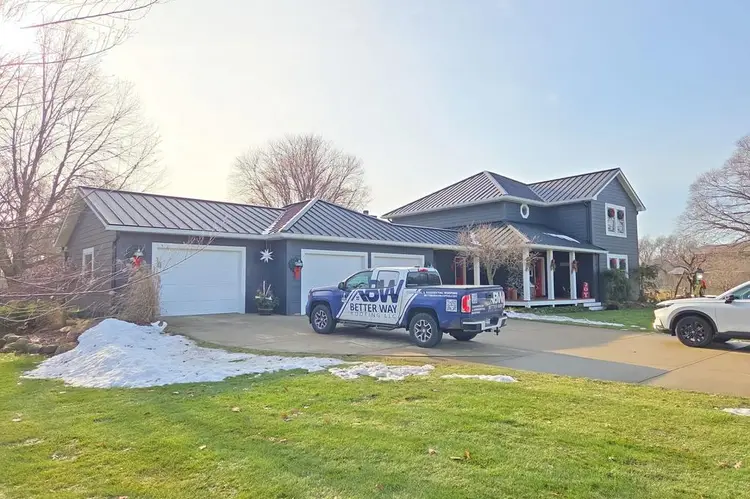
Exposed fastener still makes sense for plenty of homes. If you’re on a budget, if it’s an outbuilding or an addition, or if you’d rather spend the difference somewhere else, you still get a metal roof, and at 15 to 25 years a set of new screws costs a lot less than the gap between the two systems.
If you can afford a hidden fastener, choose that method. It’ll last longer and look better. If you’re 25 years old and you’re in your forever home, that’s where I’d put my money.
Easy Financing, Reasonable Price
“John and his crew were absolutely amazing! From start to finish they were easy to work with and answered all of our questions. Financing was easy and they have plenty of options. The crew worked hard and fast and they cleaned everything up when they were done so we wouldn’t have to worry about anything. Oh and the price was very reasonable as well!”
Larisa L.
Become our next happy customer →What colors are homeowners choosing for metal roofs?
Quick Answer: Burnished slate, black and charcoal are our three most popular. You can pick any color, and both systems come in the same range.
You get to choose your color. What I see most is this. If someone’s redoing the whole property, black roof and white siding is the in thing right now. If the house has yellow or tan siding, burnished slate goes well. Charcoal looks good against blue, white or gray siding.
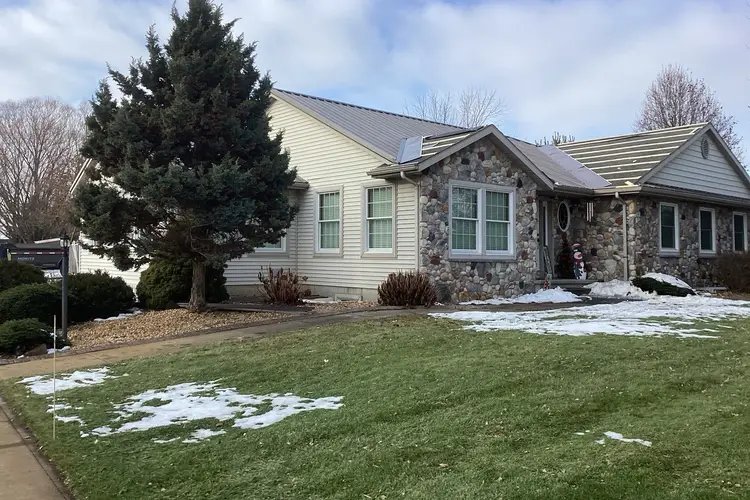
One more choice: textured or smooth. Textured costs a little more and it’s easier to walk on, so if you’re up there cleaning a chimney every fall, it’s worth considering.
Go on our website and punch your house into the roof visualizer. Upload a photo and try the colors on your own house before you pick one.
Exposed fastener or standing seam: how to decide
Quick Summary: Budget and how long you’re staying decide it. Everything else is preference.
- Pick exposed fastener if price is the deciding factor, it’s an outbuilding or an addition, or you’re fine having the screws checked from year 10.
- Pick standing seam if it’s your forever home, you want the cleanest look, or you never want to think about the roof again.
- Either way, make sure the furring boards are in the quote and ask what gauge the panel is. Those two things matter more than the brand.
Still deciding whether metal is right for you at all? Start with metal roof vs shingles, and the noise question most people have is answered in is metal roofing loud when it rains.
This article is part of our complete metal roofing guide for Indiana homeowners.
Two Metal Roofs. One Honest Price for Each.
A free assessment and a written price for both systems, so you choose with real numbers.
Get My Free AssessmentEasy Financing, Reasonable Price
John and his crew were absolutely amazing! From start to finish they were easy to work with and answered all of our questions. Financing was easy and they have plenty of options. The crew worked hard and fast and they cleaned everything up when they were done so we wouldn’t have to worry about anything. Oh and the price was very reasonable as well!
In and Out Quickly, As Promised
I got a new metal roof. They did a great job and were in and out quickly on the date they said they would be. It wasn’t much more than the highest quote I received for Asphalt shingles.
No Surprise Charges at the End
When the job was finished, you would never know they were here. The clean up was fantastic. Best of all, at the completion of the job, there were no suprise additional charges. Great job Better Way.
The Whole Process Was Painless
Would highly recommend this company! Our call for an estimate was returned promptly. The whole process from picking out our new roof to installation was painless. The crew members were professional and respectful.
Made My Old House Beautiful Again
They did a beautiful job installing my new metal roof, cleaning gutters out and installing gutter guards! They assessed the old roof and gave me options of shingle and metal with all the details so I could make a decision best for this project.
Frequently Asked Questions
Is standing seam the same as hidden fastener metal roofing?
Yes. Standing seam and hidden fastener are two names for the same system: panels that lock together so no screws show. Some people also call it snap lock. Exposed fastener, which we call pole barn metal, has the screws through the face of the panel where you can see them.
How much more does a standing seam roof cost than exposed fastener?
Around $11 per square foot installed against about $6.30 for exposed fastener. On our recent jobs, exposed fastener roofs ran $21,730 to $30,295 and hidden fastener $31,395 to $44,028, depending on roof size and extras like gutters.
Do exposed fastener metal roof screws need replacing?
Eventually, yes. The rubber washer under each screw deteriorates in the sun’s UV rays. Have them checked from about year 10, then every three to five years. Most need tightening or replacing between 15 and 25 years, and that’s still cheaper than a standing seam roof.
Can a metal roof go over old shingles?
Yes, with furring boards between the shingles and the metal. Screwing straight through old shingles with self-drilling or self-tapping metal screws into an OSB deck is the most common metal roof failure we replace. As the shingles break down underneath, the metal settles but the screws don’t, so they end up loose.
What gauge is standing seam vs exposed fastener metal?
We use 29 gauge on exposed fastener and 26 gauge on standing seam. A lower gauge number means thicker steel. 26 gauge carries a Class 4 impact rating, the top hail rating, which many insurers reward with a discount.
Last updated: October 8, 2026