
The short answer
Most residential roofs are done in one to two days. Here’s the whole thing, start to finish:
- Before install day: move your cars out of the driveway and secure fragile items inside. The crew handles the rest.
- Install day: a crew of four to six arrives around 8am, protects your property first, then tears off, dries in and installs.
- Cleanup: the crew picks up everything and runs a magnetic nail sweeper across your yard.
- After the crew leaves: your project manager does a final inspection, and on shingle roofs we register your Owens Corning warranty.
- If it rains: the crew watches the radar and works in sections, so your home is never left unprotected.
A new roof is one of the biggest investments you’ll make in your home, and if you’ve never been through it before, not knowing what to expect can be the most stressful part. The honest answer: the process is straightforward, and when your crew knows what they’re doing, it’s a lot less disruptive than most people imagine.
What happens after you sign the contract?
Quick Answer: You’ll usually be scheduled within two to six weeks, and your project manager will keep you updated on timing as your install date approaches.
Once the contract is signed, your job goes on the schedule. Most residential projects book two to six weeks out, depending on the time of year and crew availability. If you have an urgent situation, like an active leak or storm damage that can’t wait, we do what we can to get there early.
Between signing and install day, your project manager will stay in touch with updates on scheduling and any changes. Weather can shift things around, especially if there are multiple days of rain back to back, but you’ll always know where you stand. Wondering about the day count itself? We’ve got a whole guide on how long a roof replacement takes.

“If we’re scheduled and it looks like rain, we don’t just cancel the whole day. We have a radar too. If it’s a couple hours of afternoon rain, we’ll tear off and install an area we can finish before the weather arrives, get everything dried in, and you’re protected.”
How should you prepare your home for a roof replacement?
Quick Answer: Move your cars out of the driveway, secure fragile items inside, and the crew will handle the rest.
There are a few simple things you can do the day before to make everything go smoothly:
- Move your cars out from under the drip line so they don’t get blocked in by the trailer and equipment
- Patio furniture: the crew can move it, but if you want to pull it into the garage ahead of time, that’s one less thing to think about
- Inside the house: take down any wall hangings, pictures, or shelves that might rattle loose from the vibration. It won’t shake your house apart, but the motion from tear-off can knock things off walls
- Fragile or valuable items near exterior walls are worth moving to a safer spot for the day
- Pets, especially dogs, are happier somewhere they feel safe. The noise and the strangers on the roof can stress them out
You don’t need to worry about permits. We get all the permits, whether your city handles them directly or contracts them out. You don’t need to do anything.
No Nails Left Behind
“Outstanding communication throughout entire job. The crew completed roof lightning fast. Great quality material and workmanship, they cleaned up my yard very well, haven’t found any nails or screws anywhere, like other roofing companies I have used in the past.”
Phil C., roof and gutter installation
Become our next happy customer →What actually happens on install day?
Quick Answer: The crew of four to six arrives around 8am, protects your property first, then tears off, dries in, and installs. Most residential roofs are done in one to two days.
Here’s the sequence, start to finish:
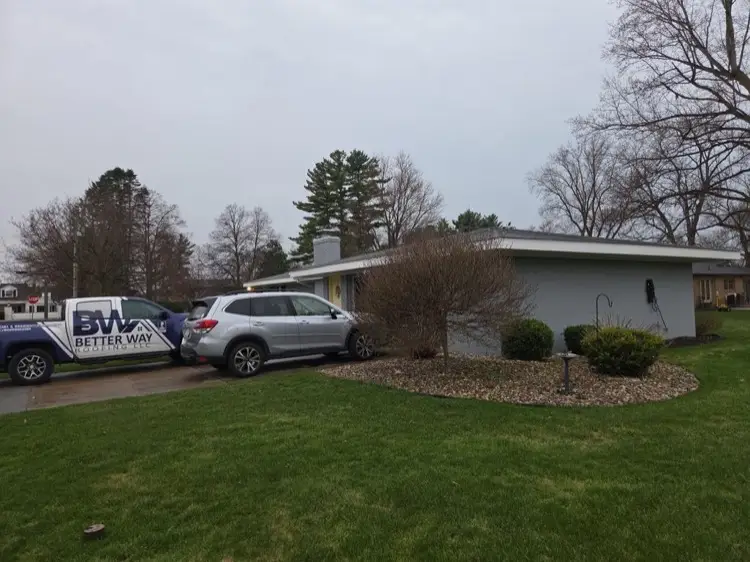
The crew arrives, usually at 8am. A typical crew is four to six people. The trailer parks at the curb or somewhere out of the way. Your project manager is normally on site from the start and stays through tear-off and dry-in, the messiest parts of the day. If they step away, it’s to grab materials or run the dump trailer, and they’ll keep you in the loop.
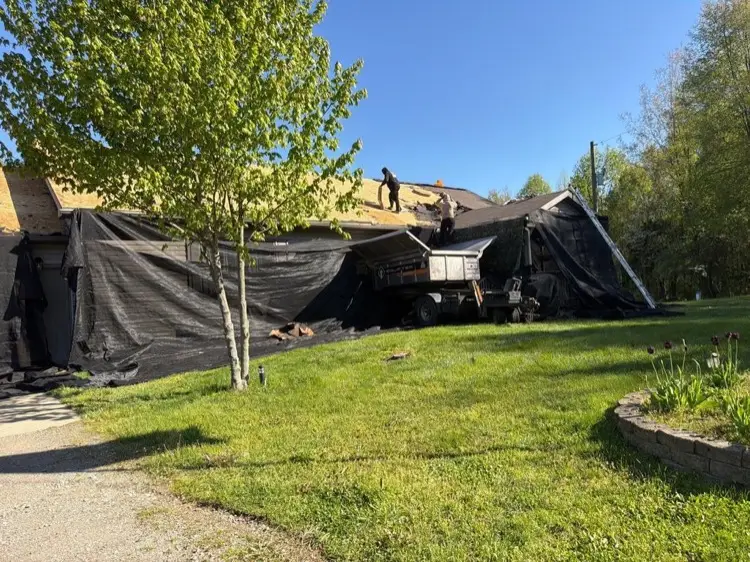
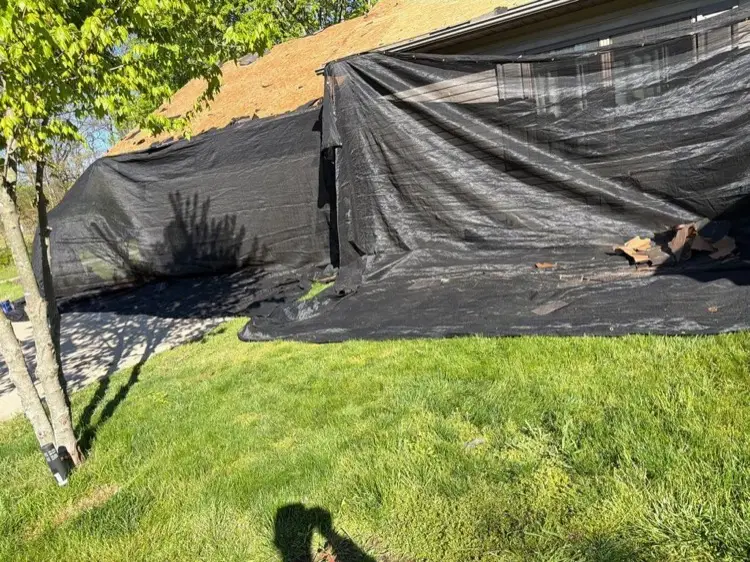
First job: protect your property. Before anything else, the crew sets up the Better Way Landscaping Shield. This is a catch-all netting system that goes up underneath your soffit, covering bushes, landscaping, and the ground around your home. The poles have foam tops so they don’t scratch your soffit or siding, and they’re fully adjustable. If you have large front windows, the crew will place sheeting in front of them for extra protection.
Then: tear-off begins. The old shingles come off section by section. This is the noisiest part of the day, and there’s no getting around it. If you work from home, plan to be somewhere else, or at least expect that calls and concentration are going to be difficult. The good news: most of the heavy noise is done by mid-afternoon on day one.
“We never tear off more than we can dry in before the end of the day. If there’s weather coming, we work in sections. Your home is never left exposed overnight.”
Dry-in. Once the old shingles are off a section, the crew lays down the ice and water shield (an adhesive underlayment that prevents ice damming) in the critical areas, then synthetic underlayment over the rest of the deck. Once that’s done, your roof is “dried in,” meaning it will shed water even if the shingles aren’t on yet.
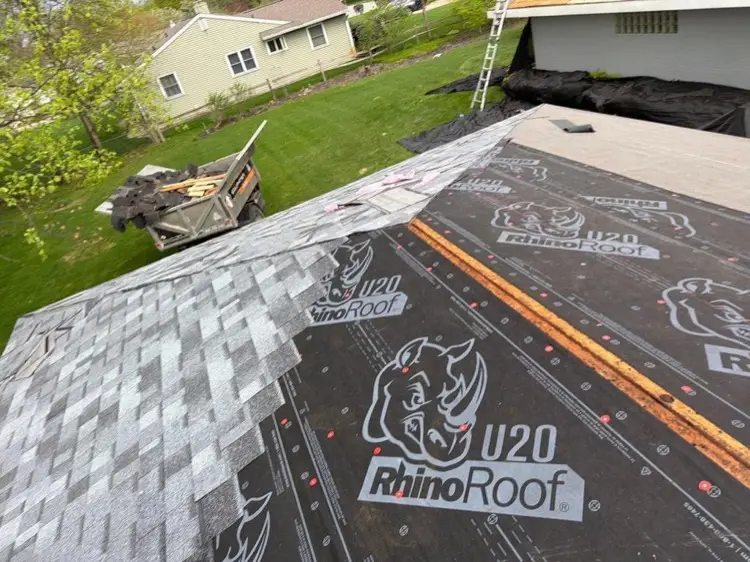
Shingle installation. New shingles go on over the underlayment. On a typical ranch-style home (25 to 30 squares, where a square is 100 square feet of roof), the crew can tear off and install in a single day. To give you a real example: on a recent 32-square roof, the crew had the whole thing torn off and dried in by noon, and finished the last couple hours of shingling the next morning. If the roof has multiple layers to remove, needs new sheeting, or has a steep pitch, it may take two to two and a half days.
“A one-layer tear-off is the easiest. But sometimes you’ve got two or three layers, and that bottom layer is so deteriorated it just crumbles into pieces. That’s a lot more cleanup and a lot more time.”
How does the cleanup work?
Quick Answer: The crew picks up everything, runs a magnetic nail sweeper across your yard, and does a visual scan before they leave.
This is the part most homeowners worry about, and honestly, it’s the part we take most seriously.
After tear-off, the bigger debris gets loaded straight into the trailer. Anything that makes it past the Landscaping Shield gets picked up by hand. Then the crew runs a magnetic nail sweeper across your entire yard, driveway, and the areas around your home.
After the magnet, they do another visual walk-through to catch anything the magnet missed. We’ve tried a lot of magnets, and even the good one we run now won’t catch every single nail. Will you occasionally find a stray one a week later? It can happen, but it’s rare, and if you do, just give us a call and we’ll come back out.
What happens after the crew leaves?
Quick Answer: Your project manager does a final inspection, you get invoiced, and on shingle roofs Better Way registers your Owens Corning warranty. You don’t need to do anything.
Once the roof is complete, the project manager does a final inspection. If you want to walk the property with them while they check everything, you’re welcome to. If you’d rather not, that’s fine too. You’ll also have photo documentation of the work, including before and after shots, so you can see what was done without climbing a ladder.
After the inspection, you’ll receive your invoice. Payment options include electronic check, credit card, physical check, or financing. Payment is due upon completion, though some homeowners arrange a 30-day window.
On shingle roofs, your Owens Corning warranty registration is handled entirely by Better Way. You don’t need to do anything. We process warranty registrations roughly every two weeks, and you’ll receive your warranty documentation by email. The full coverage terms are on our warranties page.
“If you spot something after we leave, a nail in the driveway, a piece of flashing that doesn’t look right, just give us a call. We’ll come out and take care of it. That’s what we’re here for.”
Never Pushy, Always High Quality
“He was responsive, helpful with my questions, and honest, and only did the work that was necessary... He is never pushy. They got the work done quickly and the work is always high quality and reasonably priced. I will continue to call Better Way Roofing for my roofing needs.”
Rachel H., repeat customer
Become our next happy customer →What about weather delays?
Quick Answer: Rain can push the schedule, but the crew monitors radar and works in sections so your home is never left unprotected.
A full day of rain will push things back. But a couple of hours of afternoon rain? The crew works around it. They’ll tear off and install a section they can complete before the weather arrives, get it dried in, and pick up where they left off the next day.
You’ll always be informed if the schedule shifts. No surprises. That’s part of how we work on every job.
Now you know what happens on the day. The other question is what it costs, and we publish real prices from real local jobs on our pricing page.
Ready to see what your roof replacement would cost?
We’ll walk your roof, talk you through the expected timeline, and give you a fixed written price. Free, and no pressure.
Get My Free AssessmentNo Pressure, Excellent Installers
Salesman was not pushy. Excellent installers. On time. Friendly. And the roof looks great.
No Surprise Charges at the End
When the job was finished, you would never know they were here. The clean up was fantastic. Best of all, at the completion of the job, there were no surprise additional charges.
They Told Us One Roof Could Wait
We actually had two roofs to be evaluated. One roof had areas of severe granulation loss and was recommended for replacement... The other roof they said could wait 3-5 years.
Kept My Yard Clean
Great communication, didn't try to upsell anything. Professional install, cleaned up the mess and made sure to take precautions to keep my yard clean during the work with tarps and raised dumpsters.
They Answered on Christmas Eve
Super responsive and checked out my roof on Christmas Eve when other companies did not even answer phone. John was an excellent communicator and helped me sort thru what was best for my house.
Fast and Fairly Priced
Fixed our roof in a timely manner, at a very reasonable price.
Frequently Asked Questions
How long does a roof replacement take?
Most residential roofs take one to two days. A straightforward single-layer tear-off on a ranch-style home can be done in a single day. Multiple layers, new sheeting, or a steep pitch may take two to two and a half days.
Do I need to be home during the roof replacement?
No. The crew and project manager handle everything. Many homeowners prefer to be away during tear-off because of the noise.
Will the roofing crew damage my landscaping?
The Better Way Landscaping Shield system protects your bushes, plants, and soffit during tear-off. Large windows get covered with sheeting. The crew cleans up everything and runs a magnetic nail sweeper before they leave.
Does Better Way handle the permits?
Yes. Better Way pulls all required permits. You don’t need to do anything.
What if I find a nail in my yard after a roof replacement?
Call Better Way and they’ll come back out. It’s rare, but it can happen. The crew runs a magnet and does a visual scan, but the occasional nail can hide in grass.
Last updated: September 13, 2026