

The short answer
- Fascia is the long flat board along the lower edge of your roof. It’s where your gutters hang.
- Soffit is the panel under the overhang, usually vented, sealing the gap between the fascia and your wall.
- Why they matter: they protect the roof edge, hold your gutters, and feed fresh air into your attic.
- Warning signs: peeling paint, sagging gutters, soft or crumbling wood, water stains, and birds or squirrels getting in. Most trace back to water.
Getting a new roof? That’s the natural time to fix or upgrade them, because any hidden rot is exposed once the old material comes off. When we replace them
Most people never think about fascia and soffit until one starts to rot or blows off in a storm. But they do real work up there, and when they fail, your roof and your attic pay for it.
What is fascia?
Quick Answer: Fascia is the long, flat board that runs horizontally along the lower edge of your roof and gable ends, capping the ends of the rafters. It's where your gutters are attached.
Stand at the curb and look at the edge of your roof, the line where the roof meets the top of your gutters. That board running along it is the fascia (say it "fay-sha"). It caps off the ends of the rafters, the angled beams that hold your roof up, and gives the roofline a clean, finished edge.
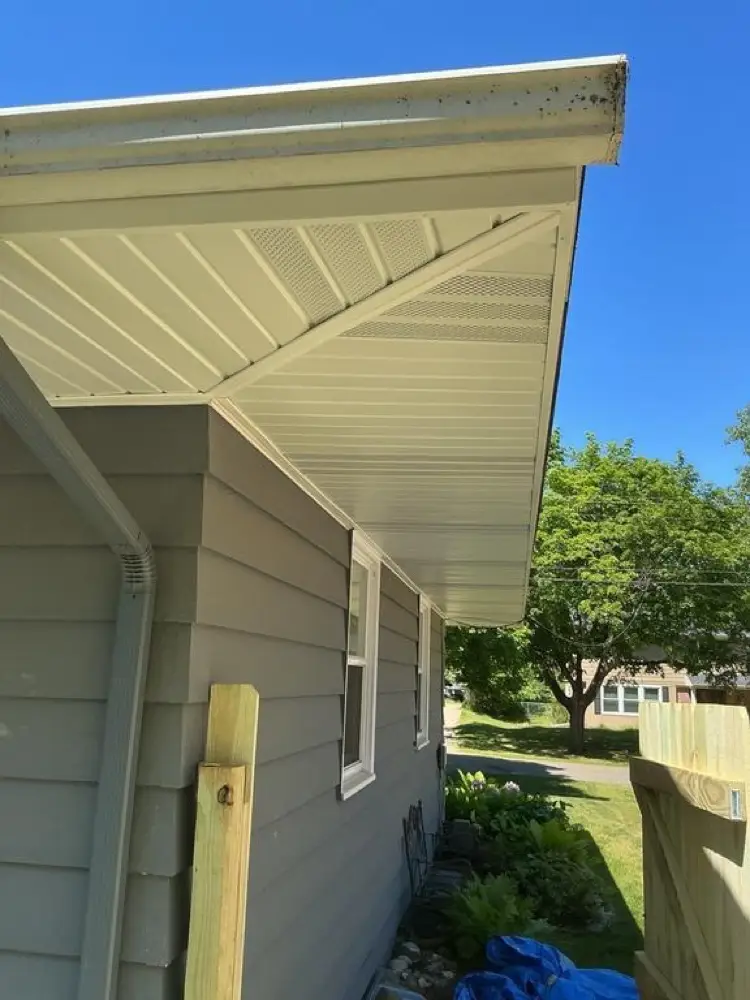
It has two important jobs. First, it's the anchor for your gutters. Every gutter on your house is fastened to the fascia, so that board is carrying the weight of the gutters plus whatever water and ice they're holding. Second, it's a barrier. A solid fascia keeps wind-driven rain and pests from getting back into the roof structure behind it.

“Your fascia takes the beating for your gutters. When gutters clog and overflow, that water runs straight down the back of the fascia board instead of out the downspout. Do that for a few winters and the wood rots from behind, where you can't see it. Keeping your gutters clear is half the battle for keeping your fascia sound.”
What is soffit?
Quick Answer: Soffit is the panel that covers the underside of your roof's overhang, sealing the gap between the fascia and your exterior wall. It usually has vents in it along the eaves.
Now walk under the edge of your roof and look straight up. The paneling you see, closing off the underside of the overhang, is the soffit (say it "soff-it"). The overhang itself, the part of the roof that sticks out past your walls, is called the eave. The soffit is what finishes the underside of that eave so you're not looking up into open rafters, birds, and weather.
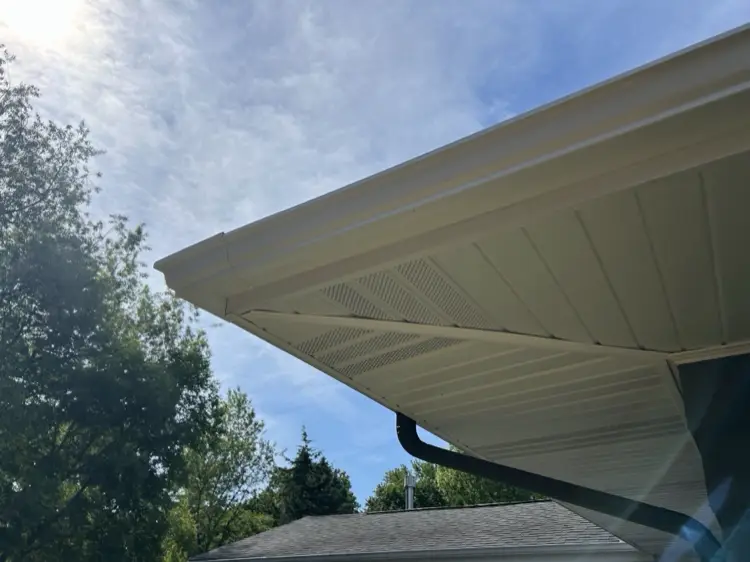
Most soffit isn't solid. Look closely and you'll see it's either vented panels or has small vents set into it. Those are there on purpose, and they matter more than almost anyone realizes.
Why do fascia and soffit matter for your roof?
Quick Summary: Together they finish and protect the roof edge, hold your gutters, and, through the soffit vents, feed fresh air into your attic. That attic airflow is what keeps your whole roof healthy.
The finishing and gutter-holding part is easy to picture. The part people miss is ventilation, and it's the reason I care about soffit so much.
Your attic needs to breathe. A properly vented roof pulls cool, dry air in through the soffit vents down at the eaves, and pushes hot, moist air out through a ridge vent at the very top (the vent that runs along the peak of the roof). That constant flow, in at the bottom, out at the top, is what keeps your attic from turning into an oven in summer and a damp box in winter. It's the same intake-and-exhaust principle ENERGY STAR describes for attic ventilation: air moves into the attic at the soffits and out through the ridge.
When that airflow works, your roof lasts longer, your energy bills are lower, and you're far less likely to get ice dams (ridges of ice that build up at the roof edge in winter and force water back up under your shingles). When the soffit vents are blocked, painted over, or were never enough to begin with, all of that goes the other way.
“Half the ice dam problems I see in Northern Indiana trace back to poor attic ventilation, and a blocked soffit is often part of it. If your soffit vents are clogged with dust, paint, or insulation shoved right up against them from inside the attic, air can't get in. You can have a brand-new ridge vent, and it still won't breathe efficiently, because a roof breathes in at the soffit and out at the ridge. It's always best to address any soffit venting when you're doing a new roof to make sure the whole system works together.”
This article is part of our guide to understanding every part of your roof.
What are the warning signs your fascia or soffit is failing?
Quick Summary: Peeling paint, sagging or pulling-away gutters, soft or crumbling wood, water stains, and birds or squirrels getting in are the main red flags. Most trace back to water.
Fascia and soffit are usually the first parts of a roof to show trouble, because they sit right where water collects. Keep an eye out for:
- Peeling or bubbling paint on the fascia board. Paint lifts when there's moisture in the wood behind it.
- Gutters sagging or pulling away from the house. That often means the fascia they're bolted to has gone soft and can't hold the screws anymore.
- Soft, dark, or crumbling wood you can see or press on. Rot spreads, so a small soft spot rarely stays small.
- Water stains streaking down the fascia or on the soffit underneath.
- Birds, squirrels, or wasps getting into the eaves. A hole big enough for a pest means a hole big enough for water.
If you spot any of these, it's worth a look sooner rather than later. Rotten fascia and soffit don't heal, and once the water gets past them into the rafter ends and roof deck, a small trim repair can turn into a structural one.
Can't Even Tell Where the Repair Was
"Had a 5 foot long piece of fascia blown off of our roof during a storm. The crew came out in 2 weeks and had a replacement up within 20 minutes. Good communication. Can't even tell where the repair was done."
Michael, Granger, Indiana
Become our next happy customer →What are fascia and soffit made of?
Quick Summary: Traditionally wood, but today aluminum, vinyl, and metal are common. Each trades off looks, cost, and how much upkeep they need.
There are a few materials in play, and the right one depends on your house and your budget:
- Wood is the traditional choice and still looks great, but it needs paint and upkeep, and it's the most likely to rot if water gets to it.
- Aluminum is light, doesn't rot, and is often wrapped over existing wood fascia for a low-maintenance finish. Aluminum is thin and does risk being dented by accident.
- Vinyl is the most common on our jobs. It is also affordable and low-maintenance, and vented vinyl soffit is a workhorse for attic airflow.
- Metal is the tougher, longer-lasting option, at a higher upfront cost.
Typically, our preferred setup is to have an aluminum fascia with a vinyl soffit.
Do fascia and soffit get replaced when you get a new roof?
Quick Answer: Sometimes, yes. We offer it as an optional upgrade if it is needed or wanted. A reroof is the natural time to fix or upgrade them, since the crew is already working at the roof edge and any hidden rot is exposed once the old material comes off.
A new roof is the best opportunity you'll get to sort out tired fascia and soffit. Once the old edge is opened up, we can see exactly what condition the wood is in, replace anything that's soft, and upgrade the ventilation while everything's accessible. Doing it later, on its own, usually costs more because it's a separate trip and a separate setup.
That's also why a good inspection looks at more than just your shingles. The roof edge, the ventilation, and the trim are all part of whether your roof actually performs.
Above and Beyond, Start to Finish
"Lyle and Larry Lehman went above and beyond on the installation of my new roof: new decking, metal roof with new fascia and new soffit. Their crew did an excellent job from start to finish. I would recommend Better Way to anyone needing any type of roofing."
Dave, Elkhart, Indiana
Become our next happy customer →Worried about the edge of your roof?
We'll check your fascia, soffit, and attic ventilation as part of a full, no-pressure assessment and tell you honestly what needs doing and what can wait.
Get My Free AssessmentNo Pressure, Excellent Installers
Salesman was not pushy. Excellent installers. On time. Friendly. And the roof looks great.
No Surprise Charges at the End
When the job was finished, you would never know they were here. The clean up was fantastic. Best of all, at the completion of the job, there were no surprise additional charges.
They Told Us One Roof Could Wait
We actually had two roofs to be evaluated. One roof had areas of severe granulation loss and was recommended for replacement... The other roof they said could wait 3-5 years.
Kept My Yard Clean
Great communication, didn't try to upsell anything. Professional install, cleaned up the mess and made sure to take precautions to keep my yard clean during the work with tarps and raised dumpsters.
They Answered on Christmas Eve
Super responsive and checked out my roof on Christmas Eve when other companies did not even answer phone. John was an excellent communicator and helped me sort thru what was best for my house.
Fast and Fairly Priced
Fixed our roof in a timely manner, at a very reasonable price.
Frequently Asked Questions
What is the difference between fascia and soffit?
The fascia is the vertical board along the front edge of your roof, where the gutters attach. The soffit is the horizontal panel underneath, closing off the underside of the roof overhang. Fascia faces out; soffit faces down.
Do soffits really need vents?
If there is no alternative way for air to flow, then yes: soffit vents are the intake for your attic ventilation. They let cool, dry air in at the eaves, which then exits through the ridge vent at the peak. Without that intake, attic heat and moisture build up and shorten your roof's life.
Can I replace fascia without replacing soffit?
You can, and sometimes only one is damaged. But because they sit right next to each other and both tie into your ventilation and gutters, it's worth having both looked at together so you're not paying for two separate repairs.
What happens if I ignore rotten fascia?
Rot spreads. Left alone, it moves from the fascia into the rafter ends and roof deck behind it, your gutters lose their anchor and start pulling away, and pests and water find the opening. A small trim fix becomes a bigger structural repair.
How long do fascia and soffit last?
It depends on the material and your gutters. Well-maintained wood can last decades, while aluminum and vinyl can go longer with almost no upkeep. Clogged gutters and poor attic ventilation are what cut that lifespan short.
Last updated: September 13, 2026